
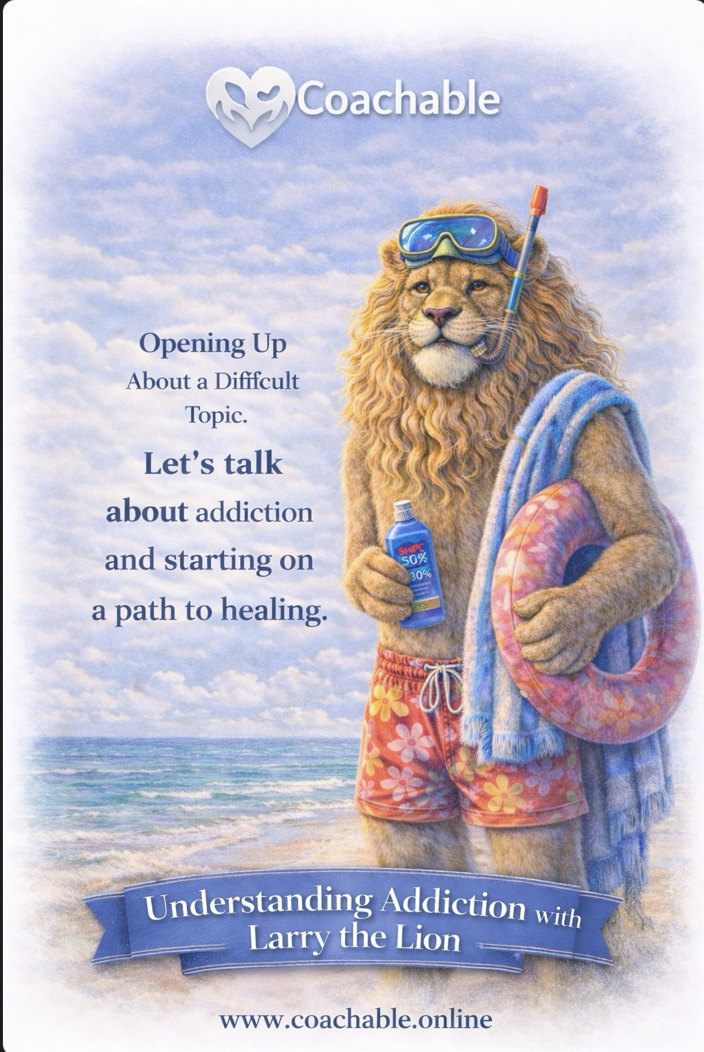
About this resource
A practical, non-shaming guide to understanding addiction, triggers, and recovery
This interactive workbook helps you understand addiction as a response to stress and nervous system overload, not a failure of character or willpower. It is designed for active use, combining clear psychoeducation with guided worksheets and reflection pages that help you apply insights directly to your own life.
Across 16 structured pages, you’ll work through how addiction develops as a form of adaptation and relief, learn to identify triggers, shame responses, and coping patterns, and begin building healthier regulation strategies that support long-term recovery.
Inside this workbook, you’ll find:
Plain-language explanations of addiction as a regulation and self-medication response
Worksheets to identify personal triggers, emotional states, and stress patterns
A visual breakdown of the cycle of addiction and why it’s hard to break
Exercises for recognizing shame and guilt responses that keep cycles going
A relapse-prevention planning worksheet focused on goals, challenges, and coping skills
Pages on building new habits, relationships, and coping skills
Multiple guided journal pages for reflection and integration
This workbook is designed to:
Reduce shame and self-blame by reframing addiction through a regulation lens
Help you understand what drives urges, not just how to suppress them
Support self-reflection, coaching, or therapy work
Be used independently or alongside professional support
Who this workbook is for:
Individuals exploring their relationship with substances or compulsive behaviors
People in early recovery or relapse prevention
Coaches, therapists, and support workers looking for a structured reflection tool
Anyone seeking a non-punitive, practical approach to understanding addiction
This is not a quick-fix or motivational guide. It is a working document meant to be written in, revisited, and used over time as you build awareness, regulation skills, and healthier responses to stress.